

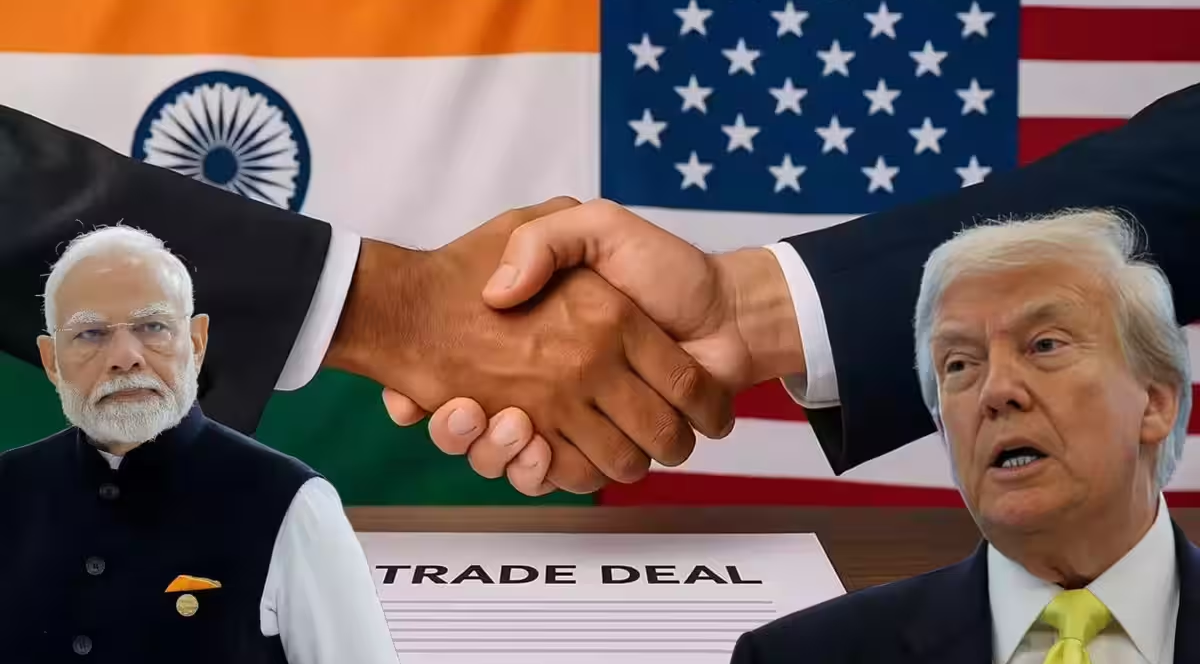
The Expiry of U.S. Oil Sanction Waivers for India
The United States has recently announced that it will not extend sanction waivers permitting India to import oil from Russia and Iran. The previous waivers enabled India to secure additional crude‑oil supply amid disruptions to global oil availability.
US Treasury Secretary Bessent formally declared that the waivers for Russian and Iranian oil imports would not be renewed. The waiver for Russian oil expired on April 11, while the one for Iranian oil is set to lapse on April 19. Neither will be extended, closing the policy window through which India imported Russian and Iranian crude oil under the US exemption regime.
Following the outbreak of the Gulf conflict, shipping through the Strait of Hormuz was disrupted by Iranian actions. Approximately 20 percent of global crude oil and liquefied natural gas shipments faced obstruction risks, which drove up international crude‑oil prices. In response to price volatility, the US Treasury Department issued a 30‑day temporary licence to India on March 5, authorising purchases of Russian crude oil. The scope of this temporary licence was later expanded to a small number of other countries. On March 20, the Treasury introduced an additional waiver for Iranian oil, allowing roughly 140 million barrels of Iranian crude to enter the global market.
Domestically for the United States, rising gasoline prices coincided with mid‑term elections. Higher oil prices entailed economic and political risks associated with mounting inflation. By granting short‑term waivers and enabling countries such as India to bring Russian and Iranian crude into global markets, the US sought to moderate international oil prices and mitigate domestic inflationary pressures. This constituted the practical rationale behind the temporary exemptions. As geopolitical tensions around the Strait of Hormuz eased and US domestic oil prices stabilised temporarily, these short‑term waivers came to an end.
Divergent Expectations between the United States and India under the Waiver Regime
During the validity period of the waivers, India reaped tangible benefits in energy imports. Indian refiners placed orders for around 30 million barrels of Russian crude oil. Meanwhile, at least two very‑large crude carriers delivered Iranian crude to Indian ports, marking India’s first intake of Iranian oil in nearly seven years. Historically, Iranian crude once accounted for 11.5 percent of India’s total crude imports. Although the volume of the resumed imports remained limited, it carried indicative significance.
Nevertheless, India and the United States hold divergent interests in energy trade. In a March 5 post on X, Secretary Bessent stated that the waivers were deliberately short‑term measures designed to avoid generating substantial economic gains for the Russian government. The US also explicitly expected India to scale up purchases of American oil. This statement reflects Washington’s expectation that India would adjust its crude‑oil sourcing after receiving temporary import flexibility. While the US frames India as an important partner within its Indo‑Pacific strategy, policy concessions on core economic issues such as energy imports are time‑bound. Upon waiver expiry, India is compelled to readjust its crude import mix.
Difficult Trade‑offs Facing Indian Refiners after Waiver Termination
After the waivers lapse, Indian refiners face three major import options, all with notable constraints. First, they may source crude from Middle‑East producers at higher premium prices. Second, they could increase imports of US oil, which is more expensive than discounted Russian crude. Third, they might continue purchasing Russian oil without US waivers and risk exposure to US secondary sanctions.
Higher‑priced Middle‑East crude would push up domestic refined‑product prices in India and exacerbate inflationary pressures. US oil not only commands higher purchase prices but also incurs greater long‑distance transportation costs. Sustained unauthorised imports of Russian oil, by contrast, risk straining Indo‑US ties. Bilateral cooperation across intelligence‑sharing, defence‑technology transfer and Indo‑Pacific coordination could become leverage in US‑India bargaining.
India’s Existing Strategies for Energy Supply Diversification
To mitigate energy‑supply uncertainties, India has pursued supply‑diversification strategies over the past year. It has concluded multiple long‑term supply agreements with Gulf producers including Saudi Arabia and the United Arab Emirates in pursuit of stable pricing terms. New Delhi has also engaged with emerging oil producers such as Venezuela and Guyana to broaden its crude‑oil supplier base. India is further advancing plans to expand its strategic petroleum reserve. Still, these initiatives require time to yield results and cannot offset immediate supply‑side pressures.
The Indian government has set a target of raising the share of renewable energy in its energy mix to 40 percent by 2030. Even so, coal and petroleum remain dominant in current domestic energy consumption. Until substantial progress is achieved in energy transition, India will largely remain a price‑taker rather than a price‑setter in the international energy market.
Structural Vulnerabilities in India’s Energy Security
India’s energy security is heavily reliant on overseas supplies, and geopolitical shifts amplify this structural vulnerability. New Delhi must manage competing priorities: preserving long‑standing friendly ties with Russia while sustaining strategic cooperation with the United States; securing low‑cost crude oil to underpin domestic economic performance while navigating external constraints imposed by Western sanctions against Russia. The United States retains the initiative over whether and for how long oil‑import waivers are granted. India can only formulate responsive policies in light of externally imposed policy changes.
About the author
Eleanor Voss is a geopolitical analyst affiliated with CGSPD. Her research covers Indo-Pacific strategic competition, European ASEAN engagement, maritime risk assessment and critical infrastructure security in Southeast Asia.