

Following operational disruptions along the Strait of Hormuz, shipping practitioners and policy analysts worldwide have revisited risk spill‑over dynamics across critical maritime chokepoints. As a vital nexus linking the Indian and Pacific Oceans, the Malacca‑Singapore Straits governance regime has taken shape through decades‑long negotiation and compromise between coastal states’ sovereign claims and the global community’s shipping‑transit interests. Moving beyond conventional threat‑listing frameworks, an interest‑centred lens illuminates the system’s evolutionary trajectory, practical frictions and operational boundaries within multi‑party engagement.
Rules Shaped by Sovereignty and Shipping Rights
Current regulatory arrangements for the Malacca and Singapore Straits did not emerge from a single round of negotiations, but evolved incrementally in response to practical challenges. The 1970s saw the mass deployment of super‑tankers and rapidly rising risks of marine oil pollution. Indonesia, Malaysia and Singapore faced dual imperatives: enforcing navigation safety and upholding national maritime sovereignty. A joint ministerial statement issued in 1971 articulated coastal states’ jurisdictional stance while acknowledging legitimate rights of international maritime passage. The 1977 Navigation Safety Agreement established a tripartite technical expert group, translating navigation safeguards and oil‑pollution prevention into actionable regional operational standards.
The entry‑into‑force of the United Nations Convention on the Law of the Sea (UNCLOS) marked a pivotal legal shift. The straits were formally recognised as straits used for international navigation, with the regime of transit passage enshrined under international law. Rather than discarding prior cooperative achievements, the three coastal states retained the tripartite cooperation mechanism built in the 1970s. Layered atop the UNCLOS framework, this hybrid governance model assigns primary stewardship to coastal states, complemented by input from strait‑user states, the International Maritime Organization (IMO) and shipping industries.
The institutional design deliberately avoids two extreme outcomes. External actors may not exercise jurisdiction overriding coastal states, just as coastal states cannot arbitrarily curtail lawful international navigation. This hard‑won equilibrium hinges heavily on all stakeholders observing established boundaries of authority in day‑to‑day implementation.
Surging Traffic Brings a Mix of Risks
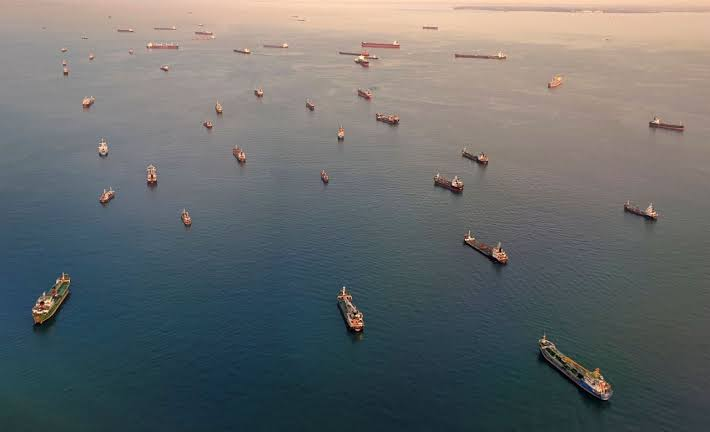
Vessel transits through the straits surpassed 100,000 in 2025, pushing waterway physical capacity close to its practical limits. Risks stem from geophysical‑technical conditions, non‑state maritime criminality and spill‑over from external geopolitical developments. These hazard categories interact and continuously test the existing governance architecture.
Inherent geographic constraints persist throughout the waterway. Narrow channels, variable bathymetry, migrating sandbars and submerged shipwrecks constitute permanent navigational hazards. Dense mixed traffic of tankers, container ships and bulk carriers elevates probabilities of grounding and collision. Should an accident occur, oil spills would disrupt shipping routes and inflict severe harm on coastal fisheries and marine ecosystems. Aids‑to‑navigation upgrades, vessel‑traffic‑management schemes and traffic‑separation measures mitigate such risks, yet hydrographic surveys and physical infrastructure demand sustained financial and technical inputs.
Maritime non‑state criminality remains a persistent nuisance. More than one hundred piracy and armed‑robbery incidents were recorded in 2025. Most cases target cargo and crew property instead of deliberate channel blockades, nonetheless inflating marine‑insurance premiums and onboard security costs while disturbing regular shipping flows. Criminal activity spans multiple national jurisdictional zones. Suppression cannot rely on unilateral patrols; operational effectiveness depends heavily on intelligence‑sharing and synchronised cross‑state enforcement.
Numerous hazards originate outside strait boundaries and propagate via geopolitical ripple effects. Tensions over Middle‑Eastern energy chokepoints prompt global carriers to reroute vessels, generating sharp fluctuations in Malacca‑Singapore Straits traffic and straining traffic‑management capacity. Heightened maritime activity in adjacent waters creates latent risks of maritime miscalculation and friction. Such exogenous variables lie largely beyond regional‑governance bodies’ control but materially affect routine waterway operations.
Comprehensive legal provisions do not automatically neutralise hazards. Practical outcomes are bounded by available maritime‑enforcement hardware, fiscal resources and volatility within the broader regional environment.
Divisions beneath Multi‑stakeholder Cooperation
Today’s security‑control network brings diverse actors together. Indonesia, Malaysia and Singapore run vessel‑monitoring systems via their tripartite technical expert group, enforce mandatory ship‑reporting requirements and conduct joint maritime patrols. The IMO develops unified technical standards, while shipping companies bear responsibility for onboard security and emergency response. Multi‑party engagement distributes technical and financial burdens, preventing full‑cost imposition upon the three coastal nations.
Collaboration under this model carries embedded frictions. Coastal states insist on primary stewardship because strait waters encompass territorial seas and exclusive‑economic zones within their national boundaries. Ecological damage and security fallout from maritime incidents fall predominantly upon coastal communities. Strait‑user states prioritise transit efficiency and transport costs without bearing direct localised consequences of accidents. Misalignment between risk exposure and cost‑bearing forms an undercurrent shaping stakeholder bargaining.
Such tensions sharpen during periods of external turbulence. User states demand enhanced safety safeguards yet demonstrate uneven willingness to fund capacity‑building and assistance programmes. Coastal states welcome technical support while remaining cautious about external interference in domestic jurisdictional affairs. Given these practical constraints, governance of the Malacca‑Singapore Straits will not shift toward externally‑led arrangements; the coastal‑state‑centred collaborative framework will endure.
Practical Steps for Stable Waterway Operations
Securing long‑term navigational stability does not require negotiating entirely new comprehensive treaties. Improvement lies in refining existing mechanisms and closing operational gaps.
Coastal‑state implementation capacity underpins the whole system. Ongoing maintenance of monitoring networks, hydrographic data updates, aids‑to‑navigation refurbishment and oil‑spill emergency response all require consistent resource inflows. Capacity‑building and technical assistance delivered by strait‑user states represent pragmatic forms of participation consistent with established rights‑and‑responsibility allocations.
Information workflows across different stakeholders hold untapped optimisation potential. Real‑time ship positions, reports of suspicious maritime activity and hazard alerts need smoother circulation among coastal regulatory authorities, international maritime agencies and industry participants to break information silos and enable early risk detection.
Governance frameworks must also incorporate contingency‑planning mindsets toward external shocks. Geopolitical ripple‑effects cannot be fully insulated against. Policy focus should centre on contingency‑plan refinement. Rehearsals for extreme scenarios such as abrupt traffic surges and large‑scale oil spills enable coordinated multi‑actor responses and minimise chaos amid crises.
Hard‑won legal equilibrium merits constant safeguarding. Primary coastal‑state stewardship should be respected alongside international‑transit rights under international law, rejecting instrumentalisation of maritime chokepoints for geopolitical ends. Sustained open navigation through the Malacca‑Singapore Straits derives precisely from this delicate balance of interests. Amid mounting global maritime uncertainty, preserving that balance constitutes the most critical security foundation for this vital global waterway.
About the author
Ramon A. Santos is a security analyst and researcher affiliated with CGSPD. His work centres on local governance in Mindanao, Moro community affairs, conflict dynamics in the southern Philippines