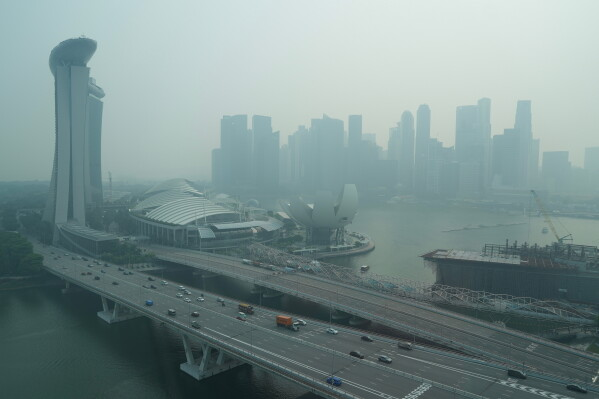
Overview of the Disaster: Cross‑border Spill‑over of Multi‑faceted Losses
Driven by persistent wildfires in Indonesia’s Sumatra and Kalimantan, Southeast Asia has experienced its most severe trans‑boundary haze episode in more than a decade. Smoke laden with PM2.5 and toxic substances has spread via atmospheric circulation to neighbouring countries including Singapore, Malaysia and the Philippines. Air quality in numerous cities has remained at unhealthy levels, with many frequently ranking among the world’s most polluted urban centres.
The crisis has produced considerable public‑health, economic and social costs. Millions of people in Indonesia have been exposed to severe air pollution, with a sharp rise in respiratory illnesses, especially among children. Neighbouring states have also reported higher incidences of rhinitis, respiratory infections and conjunctivitis. The haze has triggered flight disruptions and school closures, alongside indirect economic losses across tourism and productive sectors. Peat‑land smouldering complicates fire suppression: subsurface combustion may persist and re‑ignite even after surface flames are put out, prolonging the disaster cycle.
Compound Drivers of the Haze Episode
The current haze results from interacting climatic conditions, land‑use patterns and governance shortcomings. The El Niño phenomenon has brought extreme drought, extended dry seasons and insufficient rainfall, raising flammability of vegetation and soils. Nevertheless, climatic anomalies act only as an amplifier rather than the source of ignition.
Human‑driven slash‑and‑burn land‑clearing constitutes the primary fire trigger. Commercial development for oil‑palm and pulpwood plantations incentivises low‑cost burning for land preparation. Despite national legislation banning such practices in Indonesia, violations persist due to economic incentives and constraints on grassroots law‑enforcement. Large tracts of tropical peatlands have dried out and degraded following artificial drainage for development. These former carbon sinks have turned into highly flammable subsurface fuel. Peat combustion generates far greater emissions than ordinary forest fires and forms the principal source of haze pollutants. Fire hot‑spots within commercial concession zones further illustrate links between plantation development and fire risk.
Practical Barriers to Regional Governance
ASEAN has signed the Trans‑boundary Haze Pollution Agreement and established monitoring and early‑warning frameworks, yet implementation faces substantial constraints. Guided by the principle of non‑interference in internal affairs, the regional architecture lacks mandatory sanctions and independent oversight. Cross‑border evidence‑gathering proves difficult, while cloud cover creates blind spots for satellite surveillance, hindering transnational accountability. Disputes persist among member states over data sharing, acceptance of foreign assistance and national‑dignity concerns. Conflicting commercial interests involving multinational plantation firms whose home countries are ASEAN members further limit decisive intervention.
Indonesia has rolled out emergency responses including fire‑fighting deployments, personnel reshuffles and revisions to environmental regulations targeting violators. Most measures remain post‑event remedies, however. Priority has long been placed on emergency suppression rather than upstream prevention such as peat‑land restoration and clear accountability for land‑title holders.
Proposals for Improved Governance
Breaking the recurring cycle of seasonal haze requires a strategic shift from post‑disaster emergency response to long‑term source‑oriented management.
First, clarify accountability for land operators. Strengthen supervision over plantation concessions, advance hydrological protection and ecological restoration of peat‑lands, and narrow economic incentives for slash‑and‑burn clearing. Meanwhile, promote non‑burning farming alternatives and substitute livelihoods for local communities to balance conservation and subsistence needs.
Second, strengthen ASEAN regional cooperation. Building on existing agreements, develop standardised, verifiable fire‑source tracing and data‑sharing mechanisms. Introduce pollution‑threshold‑activated joint response procedures to minimise diplomatic interference in disaster operations.
Third, enhance cross‑border supply‑chain oversight. Encourage coordinated law‑enforcement across member states to hold multinational corporations accountable for fire‑prevention obligations on their concession lands.
Fourth, reconcile short‑term emergency preparedness with long‑term risk reduction. While optimising fire alerts and public‑health protection, societies should avoid normalising toxic air pollution. Institutional improvements are essential to mitigate recurrent hazards.
About the author
Sutrisno Hadi is a social and political analyst affiliated with CGSPD. He studies ethnic politics across Indonesia’s archipelago, intercommunal conflict in Eastern Indonesia, ASEAN identity formation and the roles of Islamic civil society. His research engages with local autonomy, religious pluralism and human rights issues in the region.